Cancer Becomes The Way
Just yesterday I was a person. Today I am a patient.
Podcast: The Deep Dive
Rivi and Todd summarise (10 mins)
Why read this article?
This article reframes cancer from something you endure into something you respond to. That shift matters because when response improves, options stay open. It shows where control actually sits and what to do next, turning confusion into clear action at the point where timing determines outcome.
The Position
Cholangiocarcinoma often arrives quietly.
Then it overwhelms your logic.
When diagnosed, cholangio does one thing very effectively. It knocks you off the path you know and forces you onto one you do not. You become disoriented, rushed into decisions you do not want to make, but must.
This is where it begins.
This is not just a disease.
It is a position you must respond to.
If the path you knew is gone, you don’t wait. This is cholangio. You take the next step now.
One step, then the next.
This cancer has tested many.
No matter how strong, smart, or capable, most become disoriented by the position they find themselves in.
But there are always a few who respond differently.
They do not simply endure the challenge. They rally to it. In doing so, the challenge does not just test them, it changes them.
They are the ones who bring structure to hope in a cancer with few effective response options.
There has been no manual.
No operating instructions.
No centralisation of lived experience to give the next patient a better starting position.
That absence continues to amplify cholangio’s advantage
But what if there was a system built from lived experience? A patient-led operating manual that gives hope structure and a way to respond.
Hold that thought.
Now it’s your turn.
Can you add to this culture of thinking?
This article shines a light so you can act.
When the path disappears, what stands in front of you becomes the way.
Cancer Becomes The Way
This diagnosis in front of you. This obstacle, called cholangio, is an unexpected shock.
Cancer is something that lurks in the deeper shadows of your mind, that something you secretly hope will never happen, but now it has.
Whether you are the patient, caregiver, or family member, cholangiocarcinoma becomes your path. Cholangio becomes the way.
Like a boulder that has suddenly blocked the road directly ahead of you, it forces your response.
You can try to go around it,
you can try to move it, or
you can turn away.
Some try once and stop.
Many do not try at all,
and others wait for someone else to move the boulder.
Whatever the response, that obstacle becomes the path.
Cancer becomes the way.
This is the culture we build around you, so you can learn to respond at a higher level and with greater effectiveness, one step at a time.
The First Response
It begins with how we see it. There will be fear, anger, and a sense of injustice. That is real, but what follows is shaped by perception.
As Shakespeare wrote, “Nothing is either good or bad, but thinking makes it so.”
That is not denial. It is direction. It is where perception is shaped.
From there, thinking begins to work for us, not against us.
Through right perception, we generate right actions, and creativity, outcomes can shift, and what was not seen before becomes visible.
This is not about thinking positively. It is about right perception that drives right action, one step at a time.
That is how new possibilities emerge. It shows up in the next step, or the one beyond it, even in the face of defeat.
The Divide
Most people see only the obstacle. With cholangiocarcinoma, that obstacle is death. It overwhelms, and the path ahead disappears into a fog of despair.
But some pause and look again. In that second look, something shifts. What was not seen before begins to appear, and what once blocked the path begins to define it.
That second look is a choice. Not everyone makes it.
The Way Forward
“For those who do not see the unforeseen, see nothing, for the known ways are blocked.”
When all known ways are blocked, a side path may still exist. This boulder does not mean the road ends. It means the known way has. A new way must be travelled.
If we do not look, we will not see.
To move forward, we must look, then act.
We must question not just what we assume, but what has been assumed for us if we are to clear a new path.
“Sometimes the longest way home is the fastest way home.”
Leadership
This is where leadership begins.
Leadership is responsibility for action. To take the next step before the opportunity passes and uncertainty grows stronger.
It may feel reckless to some, but it is not. It is necessary. Many will not or cannot leave the safety and comfort of the crowd, even when the crowd is wrong.
“I was pushed to my very edge, but I did not go over. Out there on that very thin edge between life and death, I could see far. I could see more than I had ever seen from within the crowded centre I once called life.”
Where the System Stops
The health system is strong within its boundaries. But when those boundaries are reached, the system can no longer lead. The path beyond is not their domain. That is not a failure. That is how the system is designed.
When the path disappears beyond the system, we must look up and lead.
Where It Began
I woke in ICU, dazed but alive. I remember thinking, Cholangio, I still live, I still breathe. You took my brother Graeme, but you could not take my will. That was the only strength I had left.
Claire was beside me. We made a decision. If there was a chance, we would find it. Cholangio had left me with just a one percent chance. But that was enough.
“Cholangio, your mistake became my opportunity. We did not flee. We stayed.
Cholangio, you see my path, and I see yours.
You hunted my family. Now we hunt you.”
Responsibility
That experience at my edge changed me.
Responsibility to survive overtook everything else.
When my survival was achieved, we shifted that responsibility to where it was needed.
Today’s patient survival, today.
Not advocacy or awareness. There were many others just like me. They needed help now.
So Claire and I shifted our responsibility to them.
We stepped into the space between effort and result, shoulder to shoulder on the battlefield, where outcomes are shaped every day.
That is where this began. It is what we understood best.
If advocacy is to play a role, let those we fight alongside speak to what we do well.
To those who advocate for what we do, thank you. You give us the space to do what we do well.
As I write this, I am on that battlefield, not in the grandstands around it.
That is the position that defines what we do.
What We Built
With my wife Claire, we built a patient-led cancer foundation.
Not to raise awareness, but to raise survival for today’s patient, today. To help people understand what is driving their cancer so they can act before options are lost.
To build a community with a culture of response that functions as a survival system in itself. Because response is what keeps options open.
This led me to identify the biological sequences that must collapse before cholangiocarcinoma is possible, and to build patient response systems that guide action before, during, and after diagnosis.
We partnered with people of science with deep experience in this cancer to develop prevention, early detection, and better response options.
A patient and a community are only as effective as their culture and history in this disease. That has not been in place. It is now.
The Culture We Carry
Claire and I could not yield to something so unfair. It was not strength or a hidden superpower; it was responsibility that kept us at that line.
We learned that to yield was always our choice. And we also learned that not to yield was to lead.
We were not experts at fighting cancer, but cholangio forced us into unwanted choices. To respond or not, to act or not, to take responsibility or not, to try or not to try, all of this when death seemed certain.
Choice after choice forged a survival culture. Cholangio had shaped Claire and me under enormous pressure.
We led. That was not our style, but it was how we survived.
What we do is not advocacy or awareness. It is right perception, right action, and the will to endure and persevere.
Opportunity is in the next step.
That is who we became, and why we remain to help others in that difficult space between life and death.
Where It Continued
This began in a hospital bed. A foundation was born. Now we needed to find our community.
Claire found a small Facebook group created by a daughter helping her father survive. He passed, but she did not yield. That mattered to Claire and me.
When we joined, there were around 40 people. I chose to carry it forward, to build a community with a culture that could lead, something that would take this diagnosis beyond sympathy and advocacy.
What We Honour
We honour a community and a culture that leads. We carry forward those who came before us through what we do next. We built the path they did not have.
We honour with our actions, with responsibility, and with the standards we set and follow.
We honour their families, and the challenge to eliminate this cancer, to provide meaning, pride, and legacy.
We built this path together, every day, so those who follow do not begin where we did.
The Standard
Does this help today’s patient, today?
If it does, we carry it forward. If it does not, it does not belong.
This is the standard that defines our response.
Next Step
You now understand response matters.
The next question is simple.
Where am I in this?
Because this did not begin at diagnosis.
Where you are now determines what can be done next.
Carry With You (from this article)
What position am I now in?
Am I responding, or reacting?
What happens if I delay from here?
What Comes Next
Where am I in the biological sequence that led here?
What happened inside my body to create this cancer?
What does that mean for what I must do next?
→ Read next: Inside Cholangio. Where It Begins
See where this cancer starts, inside the system itself, so you can respond before options are lost.
Why We Are Here
Cancer becomes the way, not because we want it to, but because it leaves no alternative.
When cancer stands in the way, it becomes the way.
The question is not whether the obstacle of cancer exists.
It is whether we will use it to find a new way forward.
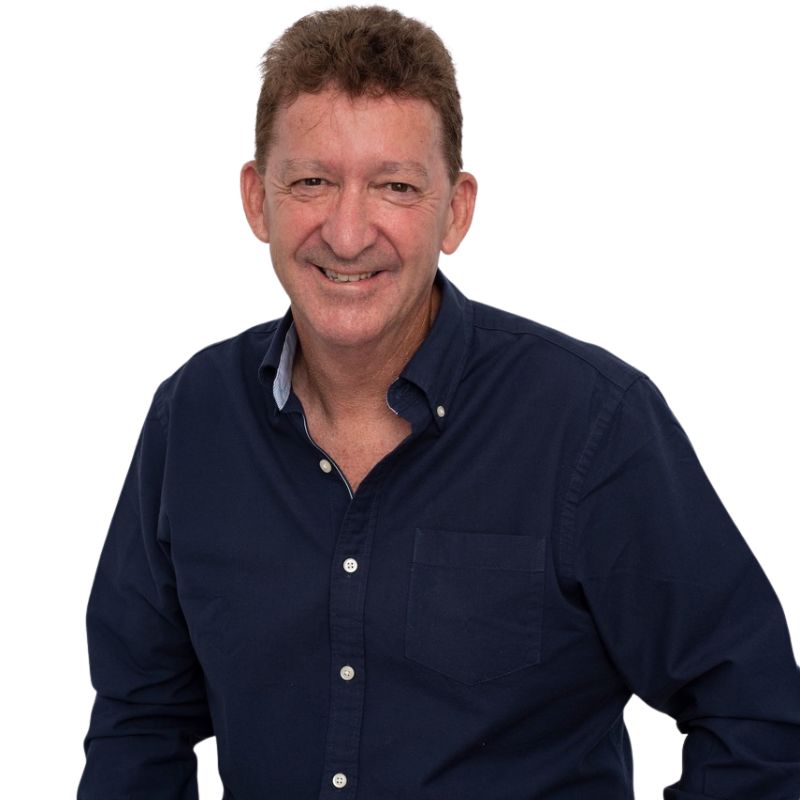
Written by Steve Holmes
Founder, Cholangiocarcinoma Foundation Australia
We are a patient-led community, built on a culture that functions as a survival system in itself.
Cholangiocarcinoma is not just a disease. It is the obstacle you must respond to.
What you do next determines the path.
That response becomes the way.
That is on you. Now.
Patient Response System
Journal. App. AI.
Patients shouldn’t be deprived of survival knowledge.
Most patients lose options not because of the cancer alone,
but because understanding comes too late.
We built the pathway to turn understanding into early action so that options won’t be lost.
The Patient Navigator Journal is how you start.
It is not a guide. It is a response system built from the lived experience of patients, caregivers, and clinicians.
It helps you know what to do, in the right order, when it matters most.
➤ Order your free Patient Navigator Journal

A Response Cultures Architecture
This article sits within the survival system developed through the doctrines of cholangio.
Doctrines Of Cholangio
Developed and written by Steve Holmes
↓
Cholangio.Org OS:
→ Systemising Cholangiocarcinoma
→ Operationalising the system
→ OPR: Optimal Patient Response, delivering the system
↓
How We Win
The public adaptation of Cholangio.Org OS:
→ Activating a patient-led foundation
→ Activating the patient response
↓
The Survival System
The System that drives a ‘Foundation.’
↓
The Three Survival Disciplines
The human interface to the system
The patient strategy inside that system
→ Read Related Article
Leave A Comment