Biliary 101
Understanding Cholangiocarcinoma, Bile Duct Cancer, and the Biliary System
Cholangiocarcinoma, also known as bile duct cancer, is a cancer that develops inside the inner protective lining of the bile ducts.
➤ Waste ➤ Liver ➤ Bile
The liver contains around 300 billion hepatocyte cells. These cells act like microscopic factories that produce bile.
These cells filter waste products and toxins from the bloodstream and convert them into bile. This is one of the body’s primary methods of removing waste.
➤ Waste ➤ Liver ➤ Bile ➤ Bile Ducts ➤ Gallbladder ➤ Duodenum
The biliary system begins in the liver as a network of tiny bile ducts.
Think of it as a plumbing system that collects bile, transports it from the liver, and stores it in the gallbladder.
When food leaves the stomach as a paste called chyme, it enters the first chamber of the small intestine, called the duodenum. The gallbladder is signalled to release stored bile into the common bile duct, which carries it downwards to the duodenum where it combines with pancreatic enzymes.
Pancreatic enzymes break dietary fats into smaller lipid (fat) fragments. Bile then emulsifies these fragments into tiny nutrient transport structures called micelles. Think of these as tiny nutrient ferries. The lipids form the ferry itself, while the cargo consists of essential nutrients from food destined for the body’s cells.
➤ Waste ➤ Liver ➤ Bile ➤ Bile Ducts ➤ Gallbladder ➤ Duodenum ➤ Nutrient Ferries ➤ Deliver Nutrients ➤ Cell Stability
These nutrient ferries transport essential nutrients across the intestinal wall and into the bloodstream, where they are delivered throughout the body’s vast cellular network. Every cell depends on this continuous supply of nutrients to maintain function, repair damage, remain resilient, and preserve cellular stability.
➤ Waste ➤ Liver ➤ Bile ➤ Bile Ducts ➤ Gallbladder ➤ Duodenum ➤ Nutrient Ferries ➤ Deliver Nutrients ➤ Cell Stability ➤ No Bile ➤ No Nutrient Delivery ➤ Loss of Cellular Stability
Bile does not simply aid digestion, it repurposes dietary fats. It enables the formation of the transport system that delivers essential nutrients to the body’s cells. Without this continuous delivery system, cells lose the building blocks required to maintain their integrity, normal function, and ability to repair.
Patients ➤ Understanding ➤ Orientation ➤ Clarity ➤ Navigation ➤ Response
Understanding how the biliary system works helps patients and caregivers visualise what is happening after diagnosis, understand where cholangiocarcinoma begins, and navigate the next steps with greater confidence and clarity.
You will now see the wider significance of a healthy biliary system and its flow from liver to duodenum.
➤ Open the Kitchen Table Version above.
Cholangiocarcinoma
(ko-LAN-jee-oh-kar-sih-NOH-muh)
- Chol means bile.
- Angio means duct or tract.
- Carcinoma means a cancer that begins in the protective tissue that lines the ducts.
Visualise the path
Waste → Bile → Plumbing → Delivery → Cells → Injury → Cancer
Turning Waste Into Bile
Bile is a chemical fluid continually produced by the liver.
The liver clears waste and toxins from the body by converting them into components of bile.
Think Waste Recycling Factories
Liver cells are like microscopic recycling factories.
Twenty-four hours a day, they convert waste and toxins into bile.
Bile Into Nutrient Ferries
When bile enters the duodenum, the first chamber of the small intestine, it performs a specialised role.
It helps convert dietary fats into tiny nutrient ferries.
These microscopic ferries carry essential nutrients across the intestinal wall and into the bloodstream, where they are delivered to the body’s vast cellular network.
Think Plumbing
Think of the bile ducts as your liver’s plumbing system.
Twenty-four hours a day, they collect and carry bile from the liver to the duodenum.
The duodenum is the body’s mixing chamber, where bile, pancreatic enzymes, and food from the stomach come together.
Where The Tumour Begins
Inside the bile ducts is a thin protective lining called the epithelial layer.
This lining is made from tightly connected cells called cholangiocytes.
Cholangiocytes work continuously to protect the bile ducts from the toxic forces of bile flowing through them.
They help bile flow smoothly and reduce the harmful effects of bile on the duct lining.
Cholangiocytes are among the hardest-working cells in the body.
To stay strong and repair damage, they depend on a constant supply of essential nutrients and energy.
It is within this protective lining that cholangiocarcinoma begins.
If damage happens faster than the immune system can respond or the cells cannot repair themselves they gradually lose normal control, with mutated genes they grow abnormally, and lose cooperation with other cells around them. Abnormal cells cluster together. This forms the tumour. Tumours can become cancerous.
Storage Chamber
Instead of all flowing directly into the intestine, much of the bile is redirected into the gallbladder.
The gallbladder acts as a storage chamber, holding and concentrating bile until it is needed.
Bile Release
When food containing dietary fat enters the duodenum, it triggers a chemical signal telling the gallbladder to release stored bile into the bile ducts.
The bile then flows downward into the duodenum.
The Mixing Chamber
Think of the duodenum as the body’s mixing chamber.
Here, bile, pancreatic enzymes, and food from the stomach come together.
Pancreatic enzymes break dietary fats into smaller fragments.
Bile then helps reshape these fragments into tiny nutrient ferries that carry essential nutrients into the bloodstream and throughout the body.
When The System Begins To Break Down
The biliary system depends on the continuous production, flow, and release of bile.
Bile flows across delicate cell membranes as it travels toward the duodenum.
When bile flow slows or bile composition changes, the consequences extend far beyond digestion.
The first problem is reduced nutrient delivery.
Without effective bile flow reaching the mixing chamber, the nutrient ferries cannot be built and essential nutrients cannot be absorbed and delivered to the body’s cellular network in sufficient quantity to meet demand.
If this continues, cells begin losing the building blocks required for resilience, stability, and repair, especially cells with high workloads such as cholangiocytes.
The second problem is physical stress on the bile ducts cell membranes themselves.
Slower-moving bile remains in contact with the protective lining for longer periods, increasing friction, irritation, and cellular stress.
This creates two problems happening at the same time:
- Bile turns from benefit to injurious. Cells membrane damage begins to outpace immun repair
- Nutrient deliver declines and cells themselves become less able to repair themselves and hold resilience against the bile.
If this continues, repeated injury begins to outpace repair.
This is the conditions where cholangiocarcinoma is able to form.
Cell Cities
Cell Cities
Think of the bile duct lining as countless connected “cell cities.”
Each city is a living cholangiocyte cell working continuously to protect the bile ducts.
Every cell is surrounded by a thin outer membrane that acts like a protective wall.
Inside each cell is a nucleus, like a city hall, holding the cell’s instructions (genes) for repair, stability, and normal function.
Under healthy conditions, these cells constantly repair themselves while withstanding the flow of bile moving past them every day.
But when bile flow slows, friction increases, and fewer nutrients arrive, the cells gradually lose strength and stability.
Repeated injury begins battering the cells from both the outside and inside.
Over time, damage can reach the genes themselves.
The cell’s instructions become harder to read and increasingly scrambled.
The cells begin losing normal control, behaving abnormally, and eventually clustering together to form a tumour.
Why This Understanding Matters
A cholangiocarcinoma diagnosis often arrives suddenly.
Most patients are immediately introduced to scans, procedures, pathology reports, treatment decisions, and unfamiliar medical language.
The challenge is that important decisions often need to be made before a patient fully understands what is happening inside their body.
Understanding the biliary system helps change that.
It helps patients and families visualise where cholangiocarcinoma begins, understand what the disease is affecting, and better follow the pathway ahead.
This understanding does not replace medical advice or treatment.
It helps patients ask better questions, participate more effectively in decisions, avoid common mistakes, and preserve options while they still exist.
When understanding comes late, options may already have been lost.
When understanding comes early, patients are often better positioned to navigate the pathway ahead.
Understanding creates clarity.
Clarity improves navigation.
Navigation helps keep options open.
Conditions
We have now seen the conditions that make cholangiocarcinoma possible.
When bile flow turns bad and damaging at the same time that nutrient delivery to the cells becomes restricted, cell function falters.
Their membranes begin to weaken, and the tightly interlocked lining they form to protect the bile ducts loses its normal resilience.
Repair systems begin falling behind, and injury starts to hold.
That matters because understanding these conditions creates opportunity.
The earlier harmful changes are recognised, the better positioned patients and clinicians may be to respond before further instability develops.
This is one reason why understanding the biliary system matters.
Understanding creates clarity.
Clarity improves navigation.
Navigation helps keep options open.
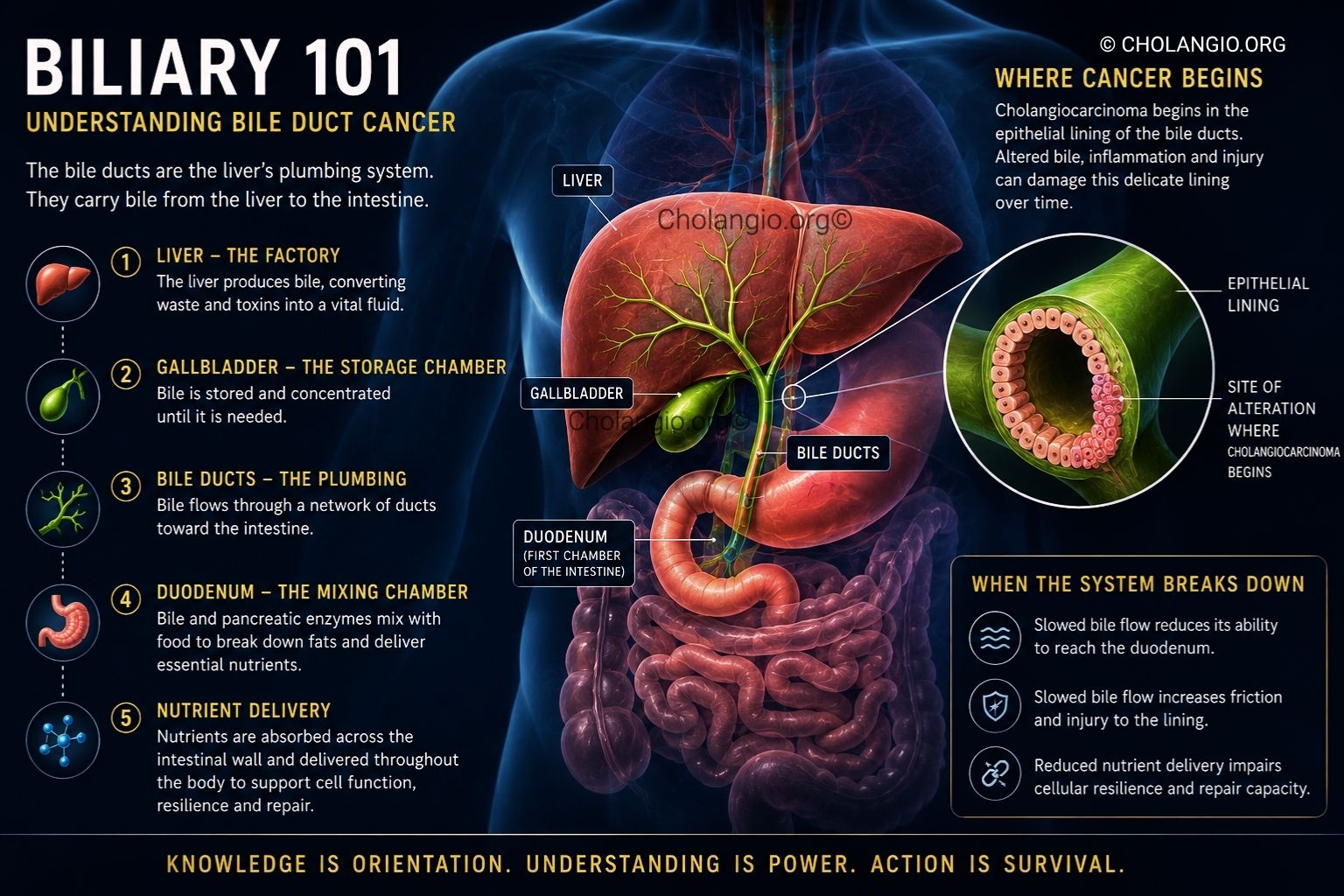
Figure 1. The biliary system includes the liver, gallbladder, bile ducts, pancreas, and duodenum.
What Is Cholangiocarcinoma
Cholangiocarcinoma is the medical name for bile duct cancer. It develops when cells within the protective epithelial lining of the bile ducts become abnormal, grow uncontrollably, and form a tumour.
Because this epithelial lining extends throughout the biliary system, cholangiocarcinoma can occur anywhere along the ductal lining. The location where it develops determines whether it is classified as intrahepatic, perihilar, or distal cholangiocarcinoma.
What Does the Word Mean?
- Chol means bile.
- Angio means duct or tract.
- Carcinoma means a cancer that begins in protective lining tissue.
Where Can Cholangiocarcinoma Occur?
Intrahepatic Cholangiocarcinoma
Develops within the bile ducts inside the liver.
Perihilar Cholangiocarcinoma
Develops where the left and right bile ducts leave the liver and join together below the liver.
Distal Cholangiocarcinoma
Develops further down the bile duct, closer to the pancreas and duodenum.
Closely Related
Gallbladder Cancer
Develops in the epithelial lining of the gallbladder.
Ampullary Cancer
Develops where the bile duct and pancreatic duct join at the ampulla of Vater before entering the duodenum.
In Plain Language
The biliary system begins in the liver and extends through the bile ducts, gallbladder, ampulla of Vater, and into the duodenum. Cholangiocarcinoma can develop anywhere along this pathway where epithelial lining tissue is present.
The Biliary System at a Glance
The biliary system is more than anatomy. It is a coordinated process that produces bile, stores it, transports it, releases it, and enables essential nutrient delivery to the body’s approximately 35 trillion cells.
It is a central metabolic engine.
Understanding this process helps explain both normal metabolic function and what happens when that function is disrupted and fails.
What Is Bile?
Bile is a chemical fluid continually produced by the liver. It serves two critical functions: removing toxins and waste from the body and enabling nutrient delivery.
The liver achieves this by converting waste products and toxins into components of bile. In this way, bile acts as one of the body’s primary waste-removal systems.
At the same time, bile plays a central role in metabolism. When released into the duodenum, bile helps organise dietary fats into tiny nutrient transport structures called micelles. These structures enable the absorption and delivery of essential nutrients throughout the body.
Without optimal bile flow, many essential nutrients cannot be absorbed and delivered in sufficient quantity throughout the body.
Over time, this creates a nutritional deficit that impairs normal cellular function, resilience, and repair.
This is how malnutrition silently takes hold.
In simple terms, bile helps remove the body’s waste and repurposes it into a system that delivers what the body cannot function without.
How the Gallbladder Stores and Releases Bile
Not all bile flows directly into the duodenum. Much of it is redirected into the gallbladder when the sphincter of Oddi, the control gate at the bottom of the bile ducts, remains closed. This allows bile to back up into the gallbladder, where it can be stored and concentrated.
The gallbladder acts as a storage chamber. It stores and concentrates bile between meals, making it available when it is most needed.
When food containing dietary fats enters the duodenum, specialised cells within the duodenal epithelial lining release a chemical messenger called CCK (cholecystokinin) into the bloodstream.
CCK signals the gallbladder to contract and release stored bile. At the same time, the sphincter of Oddi relaxes and opens, allowing bile to flow through the bile ducts and into the duodenum.
This coordinated response ensures that bile arrives precisely when it is needed to support nutrient absorption and delivery.
The Duodenum: The Body’s Mixing Chamber
The duodenum is the first of three sections of the small intestine and one of the most important control centres in the digestive system.
Think of it as the body’s mixing chamber, where food, bile, and pancreatic enzymes come together to begin the process of nutrient absorption and delivery.
Food leaves the stomach as a thick paste called chyme. When chyme containing dietary fats enters the duodenum, specialised communication cells within the duodenal epithelial lining detect this fat and release a chemical messenger called CCK (cholecystokinin), which signals the biliary engine to switch on.
This coordinated response triggers several events:
- The gallbladder contracts and releases bile, helping to depressurise the biliary system.
- The pancreas releases digestive enzymes.
- The sphincter of Oddi (the control gate at the base of the bile ducts) opens.
- Bile and pancreatic enzymes enter the ampulla of Vater, where they combine.
- The mixture then flows through the control gate and into the duodenum.
- Signals are also sent to the brain, informing it that nutrients are arriving and contributing to feelings of fullness and satisfaction after eating.
Once inside the duodenum, pancreatic enzymes break dietary fats into smaller lipid fragments.
Bile then helps shape these fragments into tiny nutrient transport structures called micelles. These ferries carry essential nutrients across the epithelial lining and into the bloodstream.
Without this process, many nutrients cannot be absorbed and delivered in sufficient quantity to meet the needs of the body’s cells. This creates a nutritional deficit that ultimately impairs cellular function, resilience, and repair.
In simple terms, the duodenum is where the biliary system, pancreas, and digestive tract work together to convert food into nutrients that the body can absorb, transport, and use.
What Happens When Bile Flow Breaks Down?
The biliary system depends on the continuous production, movement, and release of bile. When bile composition changes or bile flow slows, the consequences extend far beyond digestion.
The first problem is reduced nutrient delivery.
Without optimal bile flow, many essential nutrients cannot be absorbed and delivered in sufficient quantity throughout the body.
Over time, this creates a nutritional deficit that impairs cellular function, resilience, and repair.
The second problem is physical stress on the biliary system itself.
As bile flow slows, pressure can begin to build within the ducts. Slower-moving bile remains in contact with the epithelial lining for longer periods, increasing friction, irritation, and cellular stress.
This creates two simultaneous challenges:
- Reduced delivery of the nutrients cells need to repair themselves.
- Increased stress and injury to the protective epithelial lining.
Over time, when injury repeatedly exceeds repair, the conditions that make chronic disease and cholangiocarcinoma possible can begin to emerge.
Constant Contact: Bile and the Bile Duct Lining
As bile moves through the ducts, it remains in constant contact with cholangiocytes, the protective cells lining the bile ducts.
Every moment of every day, bile flows across this delicate surface as it travels toward the duodenum.
To understand why this constant contact matters, it helps to look more closely at the cells that form the protective lining of the bile ducts.
Cell Cities: A Simple Way to Understand the Lining
Think of the bile duct lining as countless connected cell cities, linked together to form a protective barrier between bile and the bile duct wall.
Each city is a living cell called a cholangiocyte.
Every cholangiocyte is protected by a thin outer membrane that acts like the city’s defensive wall.
This membrane helps control what enters and leaves the cell while protecting its internal structures from injury.
Inside each cell is a nucleus, which you can think of as the city’s town hall. The nucleus contains the cell’s instructions, called genes.
These instructions tell the cell how to function, repair damage, replace worn-out components, divide when necessary, and respond to stress.
Together, billions of these connected cell cities form the epithelial lining of the bile ducts. This lining must continuously withstand the flow of bile while maintaining its own integrity and repair systems.
Understanding these cell cities helps explain why injury, repair, and cellular resilience are so important to the health of the bile ducts.
Where Cholangiocarcinoma Begins
Cholangiocarcinoma begins in the protective epithelial lining of the bile ducts. This lining is formed by specialised cells called cholangiocytes, which create a protective barrier between bile and the bile duct wall.
As bile moves through the ducts, it remains in constant contact with these protective cells. Every day, the epithelial lining must tolerate the flow of bile while continuously maintaining and repairing itself.
Under Healthy Conditions
Under normal conditions, injury and repair remain in balance.
When bile composition changes, bile flow slows, pressure rises, friction increases, or cellular repair becomes impaired, the epithelial lining can become stressed and injured.
The body responds by attempting to repair the damage. Most of the time this repair is successful.
When Repair Begins to Fall Behind
At the same time, reduced nutrient delivery can gradually weaken cellular resilience and repair capacity, leaving the epithelial lining less able to withstand and recover from ongoing injury.
However, when injury repeatedly exceeds the body’s ability to repair, the conditions that make cholangiocarcinoma possible can begin to emerge.
Why This Matters
This is why cholangiocarcinoma is not simply a tumour problem. It is also a problem of the biological environment in which the tumour becomes possible.
Understanding the relationship between bile, flow, pressure, injury, nutrient delivery, resilience, and repair helps explain where cholangiocarcinoma begins and why the health of the biliary system matters.
Pressure, Injury, and Cellular Damage
The epithelial lining of the bile ducts is designed to withstand normal bile flow and continually repair itself when minor injury occurs.
Under healthy conditions, injury and repair remain in balance.
The Environment Around the Cell
When bile flow slows and bile composition changes, slower-moving bile can remain in contact with the epithelial lining for longer periods.
Pressure, friction, and cellular stress can increase, making the environment more injurious to the protective lining.
The Cell Itself
Reduced nutrient delivery can gradually weaken cellular resilience and repair capacity, leaving the cell less able to withstand and recover from injury.
In simple terms, the environment around the cell can become more damaging at the same time that the cell becomes less capable of repairing itself.
When These Processes Overlap
When these two processes overlap, injury can begin to exceed repair. This increases the likelihood of permanent cellular damage and creates the biological environment in which cholangiocarcinoma can emerge.
This relationship highlights the close connection between bile flow and nutrient delivery.
The same factors that influence bile flow also influence nutrient delivery, linking the health of the biliary environment to the resilience and repair capacity of the cells that line it.
This also shines a light on the intersection of lifestyle and biology. The same factors that influence bile flow also influence nutrient delivery, cellular resilience, and the long-term health of the biliary system.
Why This Understanding Matters After Diagnosis
A cholangiocarcinoma diagnosis often arrives suddenly. Most patients are immediately introduced to scans, procedures, pathology reports, treatment options, and unfamiliar medical terminology.
The challenge is that important decisions often need to be made before a patient fully understands what is happening inside their body.
Understanding the biliary system helps change that.
It provides a framework for understanding where cholangiocarcinoma begins, why the disease develops, how the biliary system functions, and what may happen when that function becomes disrupted.
This understanding does not replace medical advice or treatment.
It helps patients and caregivers better understand their diagnosis, ask more informed questions, participate more effectively in decision-making, and navigate the pathway ahead with greater clarity.
When understanding comes late, options may already have been lost.
When understanding comes early, patients are often better positioned to engage with their care, avoid common mistakes, and preserve opportunities while they still exist.
Understanding creates clarity.
Clarity improves navigation.
Navigation helps keep options open.
What Comes Next?
Understanding the biliary system is only the first step.
Understanding creates clarity. Clarity improves navigation. Navigation helps keep options open.
Next Steps
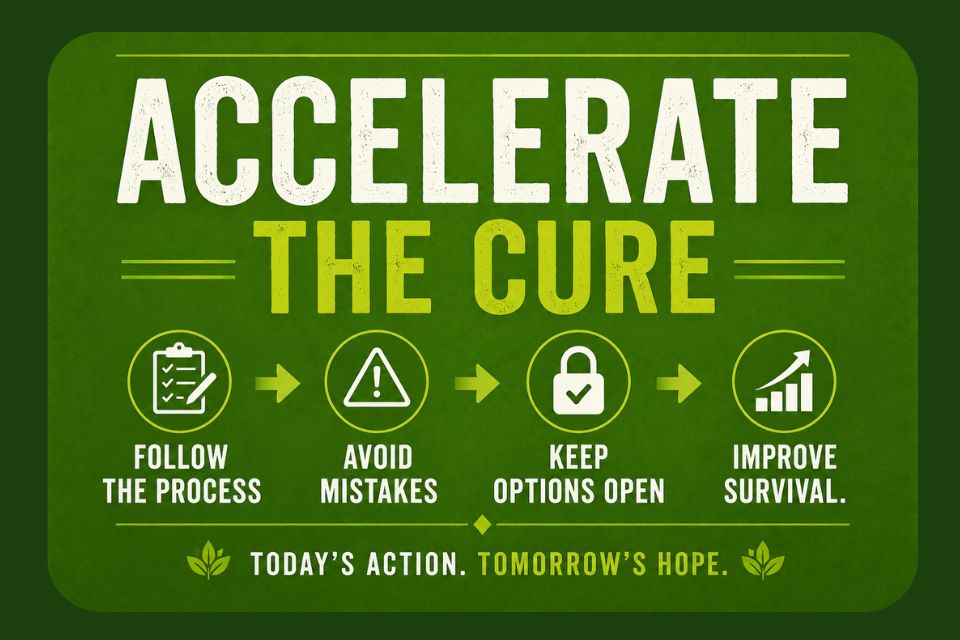
➤ Follow The Process
Visit the Newly Diagnosed Patient Pathway and follow its process of steps.
➤ Avoid Mistakes
Learn the common mistakes that quietly cost patients time and options.
➤ Keep Options Open
Understanding the biliary system, following the process, and avoiding common mistakes helps preserve treatment options and improve survival opportunities.
➤ Improve Survival
Turn understanding and what you have learned here into effective decisions, action and response.
➤ Read Our Commitment to You
Learn how our patient-led response system supports patients and caregivers.
➤ Connect with Lived Experience
Learn from patients and caregivers who have already travelled this path and gained the understanding that helps others navigate it more effectively.
Next Steps
Follow The Process ➤ Avoid mistakes ➤ Keep Options Open ➤ Improve survival.
Explore Library
- Biology & Bile Health
- Precision Medicine
- Patient Stories
- Survival Cognition
- Australia
Frequently Used
Our Commitment To You
By now, you understand why early understanding matters and why following a process helps keep options open.
You also understand something else.
Cholangiocarcinoma does not wait for understanding to arrive.
Opportunities can be lost while patients and families are still trying to understand what is happening.
That is why we exist.
We are a patient-led response system built from lived experience and driven by a responsibility to improve today’s patient survival now. At the same time, we work to understand what makes cholangiocarcinoma possible in the first place.
The cure is in the cause.
Find the cause. Accelerate the cure. Improve today’s patient survival now.
What We Commit To
Earlier Understanding
We help patients and caregivers understand what matters, earlier. Earlier understanding helps preserve options, improve decisions, and strengthen response.
Guided Navigation
We help patients understand what must be done, in the order it must be done, so important opportunities are not missed.
Keeping Options Open
Everything we do is designed to help patients preserve opportunity through earlier understanding, timely action, and effective navigation.
We Stay Reachable
Cancer does not operate within office hours. Neither do we. We remain reachable throughout the week because questions, challenges, and decisions rarely arrive on schedule.
Continuous Support
A diagnosis is not a single event. Circumstances change. New information emerges. New decisions must be made. We remain available as those challenges arise.
Family Understanding
We educate patients, caregivers, and families because understanding transforms confusion into coordinated action. An informed family becomes an advantage for the patient.
Fighting for Today and Tomorrow
We work across two survival battlefields.
The first is helping today’s patients preserve options, navigate more effectively, and improve survival.
The second is understanding the biology that makes cholangiocarcinoma possible so prevention, earlier detection, and better treatments become possible for tomorrow’s patients.
Improve Today’s Patient Survival. Today.
The Cure Is In The Cause.
Map the sequence. Where it fails, the cause is revealed.
- We are here to help you now.
- We are fighting for future patients as well.
- We are not just a support organisation.
- We are building understanding around the cause while helping today’s patients survive.